Optical Bonding for High-Performance Displays
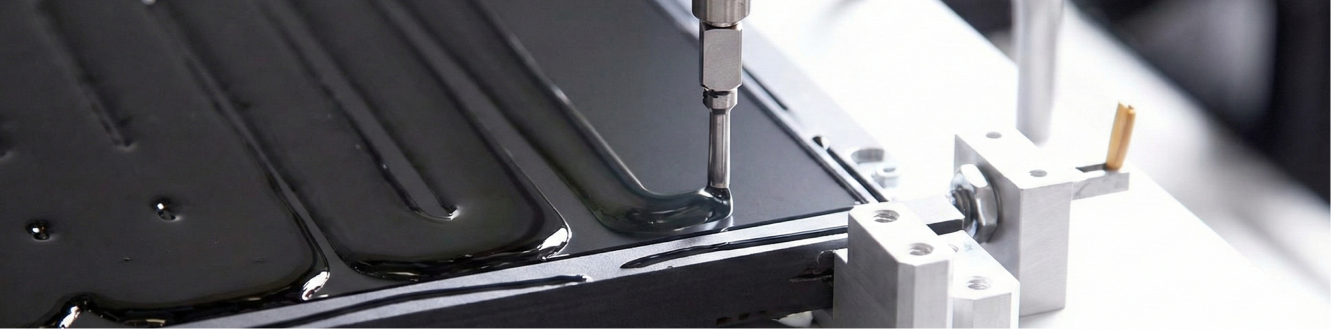
Optical bonding is a display enhancement process where an optically clear resin or adhesive permanently bonds the touchscreen to the TFT LCD, eliminating air gaps, reducing reflections, improving contrast, enhancing durability, and ensuring reliable performance in rugged and mission-critical environments.
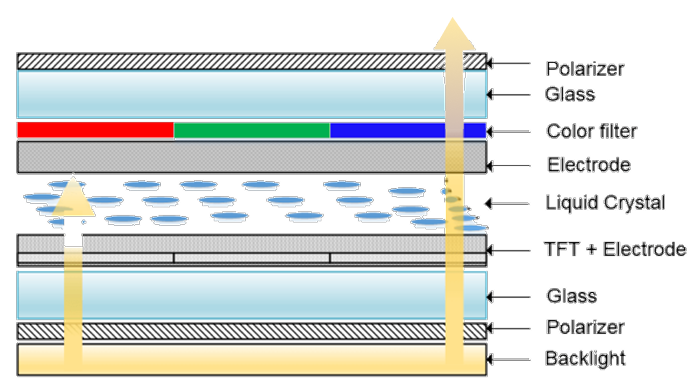
An LCD has liquid crystals between two glass plates:
the top with a color filter and polarizer, and the
bottom with TFTs and another polarizer. Light comes
from a backlight underneath. When voltage is applied,
the crystals twist to control whether light is blocked or
passed, forming the display.
Optical Bonding Technologies
Optical bonding methods vary based on application needs, environmental conditions, and performance requirements, improving display clarity, durability, and reliability across rugged, industrial, medical, and defense-grade display systems.
OCR Bonding
OCR bonding, or wet bonding, uses optically clear resin to eliminate air gaps, enhancing optical clarity, vibration resistance, and durability for rugged displays used in military, railways, and harsh environments.
OCA Bonding
OCA bonding, or dry bonding, uses optically clear adhesive sheets to bond display layers, improving visibility, reducing reflections, and enabling clean integration for medical devices and controlled indoor applications.
Key Benefits of
Optical Bonding
Durability
Improves shock and vibration resistance for reliable performance in rugged environments.
Visibility
Reduces glare and reflections, enhancing screen readability under direct sunlight.
Temperature Tolerance
Maintains display performance across wide temperature ranges and extreme climates.
Readability
Ensures clear visibility in low-light and high-brightness operational conditions.
Adaptability
Supports defense, industrial, and medical applications with varying environmental demands.
Strength
Enhances structural integrity of displays used in mission-critical systems.
Touch Precision
Improves touch accuracy and responsiveness for critical user interactions.
Extended Lifespan
Reduces internal wear, increasing display longevity and lowering replacement frequency.
Viewing Angles
Delivers consistent image quality from multiple viewing positions.
Fog Resistance
Prevents condensation and fogging during rapid temperature changes.